Himalayan and Persian Cat Health Problems: What Owners Should Know
PKD, eyes, breathing, teeth and coat: the health issues that matter most in Persian-type breeds, and how responsible breeding lowers the risks.
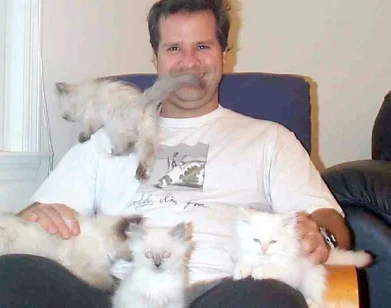 By Sean Donovan, Himalayan and Persian breeder in Waterford, VA since 1995
- The best-known inherited risk in Persian-type breeds is polycystic kidney disease (PKD).
- Flat faces can bring tear staining, eye irritation and, in some cats, narrower airways.
- Regular brushing prevents mats, skin problems and hairballs.
- Choosing a breeder who health-tests is the single biggest thing you can do. Our kittens are PKD negative, from an FeLV negative colony and guaranteed free of genetic defects.
Every breed has its health considerations. For Himalayans and Persians, most are well understood, and most can be avoided or managed with good breeding and simple daily care. This is general guidance from our years with both breeds; your own vet is always the final word.
Polycystic kidney disease (PKD)
PKD is an inherited condition that causes cysts to form in the kidneys and can lead to kidney failure over time. It is a known risk in Persian-type breeds, including Himalayans. It cannot be cured, but it can be bred out. Our kittens are PKD negative, so there is no need to worry about it later.
Feline leukemia virus (FeLV)
FeLV is a contagious virus that weakens a cat’s immune system and spreads through close contact between cats. Friendly Kittens is an FeLV negative colony. Keeping your cat indoors and asking your vet about vaccination are the best protection.
Eyes and tear staining
The flat face can make tears drain less easily, so tearing and staining are common. A gentle daily wipe with a soft damp cloth keeps it under control. Thick or coloured discharge, squinting, cloudiness or a red eye needs your vet.
Breathing (brachycephalic airways)
Brachycephalic means flat-faced. In some cats the short face narrows the nostrils and airway. Signs to watch for are noisy breathing, breathing through the mouth, or tiring quickly. Meeting the parents and choosing a breeder who works closely with a vet helps.
Teeth
A shorter jaw can crowd the teeth, so plaque can build up faster. Regular dental checks and getting your kitten used to having its mouth handled help.
Skin, coat and hairballs
A long coat left unbrushed can mat, trapping moisture against the skin. Brushing most days prevents mats, reduces shedding and cuts down hairballs. See our grooming guide.
Ringworm and parasites
Ringworm is a fungal skin infection, not a worm, and can pass to people and pets. Every Friendly Kittens kitten goes home with a vet bill of health confirming it is free of ringworm, fleas and parasites.
How to lower the risks
- Choose a breeder who tests for PKD and keeps an FeLV negative colony
- Visit, meet the parents and see the paperwork
- Keep your cat indoors
- Brush most days and wipe the eyes
- See your vet yearly, and sooner if something seems wrong
Our vet is Blue Ridge Vets in Purcellville, VA. For more, see the health section of our FAQ.